12-Hours on Your Feet – Night Shift Recovery
📜 THE FORGOTTEN SCROLLS: CHRONOLOGY OF THE NIGHT WATCH
12-Hours on Your Feet – Night Shift Recovery
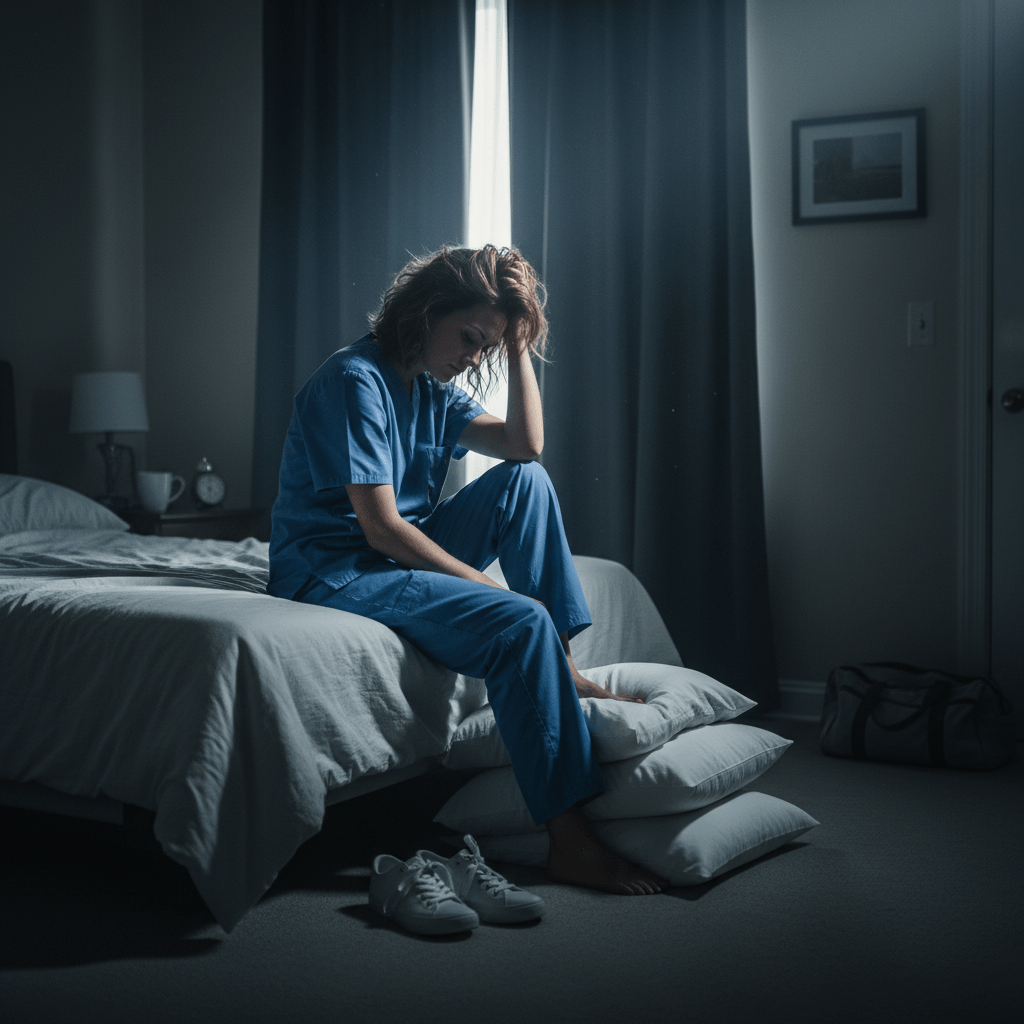
The Morning Leg Rebellion: Hard-Won Tactics for the Night-Shift Worker Whose Lower Body Is Staging a Mutiny
You’ve sat down for a total of approximately 14 minutes during your entire 12-hour shift.
The rest of the night?
Power-walking down hospital corridors.
Lifting patients.
Pushing equipment.
Bending.
Turning.
Standing on hard floors under fluorescent lights that somehow manage to make 4 AM look even more depressing.
By the time you finally get home, your brain expects peace.
Your legs, however, have other plans.
Suddenly, your calves tighten into painful knots.
Your feet start performing what feels like an involuntary Irish dance underneath the duvet.
Your knees ache.
Your lower back is complaining.
Your entire lower body feels like it has personally filed a grievance against you.
And you are lying there thinking:
“I just want to sleep.”
Unfortunately, your legs have called an emergency meeting.
🦵 WHY YOUR LEGS START A REBELLION BEFORE BED
Long periods of standing and physically demanding work can contribute to discomfort in the lower limbs and lower back. Research on prolonged standing has found associations with musculoskeletal symptoms, with blood pooling in the lower limbs identified as one of the mechanisms involved.
And nursing is hardly a desk job.
A recent systematic review and meta-analysis looking specifically at nurses found that musculoskeletal problems are common in the profession and that occupational, ergonomic, psychosocial and organisational factors can all contribute. The relationship with shift patterns themselves, however, is more complicated than the internet would have you believe.
So let’s retire the dramatic diagnosis of:
“Your electrolytes are completely depleted because you stood up for twelve hours.”
Your body is more complicated than that.
Fatigue, prolonged standing, physical workload, hydration, footwear, biomechanics, previous injuries and individual health all have a part to play.
Sometimes your legs aren’t suffering from some mysterious mineral apocalypse.
Sometimes…
you’ve just been standing on them for twelve bloody hours.
🧛♀️ THE VAMPIRE SHIFT RECOVERY PLAN
You cannot always control how physically demanding the shift will be.
But you can control what happens when you get home.
The goal isn’t to find one magical intervention that makes twelve hours of hospital warfare disappear.
It is to give your body a better chance to transition from:
WARD MODE
to
CRYPT MODE.
1. REPLENISH THE HYDRATION SHIELD
Before you collapse into bed, think about the basics.
Water first.
If you’ve been sweating, working in a warm environment, drinking a lot of caffeine or simply not drinking enough during a chaotic shift, replacing fluids matters.
But don’t automatically assume that every post-shift cramp means you need a giant bottle of electrolytes.
Electrolyte needs depend on the individual and the circumstances.
And if you have kidney, heart or other medical conditions, aggressively increasing electrolyte intake is not something to improvise.
Sometimes the glamorous recovery protocol is simply:
Drink some water.
I know.
Revolutionary.
2. MAGNESIUM: THE SUPPLEMENT WITH A PUBLICIST
Magnesium is essential for normal muscle and nerve function, which is why it has become practically the patron saint of the supplement aisle.
But here’s where we need to be honest.
Magnesium is not a guaranteed cure for nighttime leg cramps.
A Cochrane review found that magnesium supplementation was unlikely to provide clinically meaningful prevention of idiopathic muscle cramps in most older adults, and the evidence for other groups remains mixed.
So I am not going to tell you:
“Take magnesium and your calves will stop behaving like possessed electrical cables.”
That would be excellent marketing.
It would not necessarily be excellent science.
If you are considering magnesium as part of your nutritional routine, especially if you take medication or have an underlying health condition, speak with a pharmacist or healthcare professional and check the actual product instructions.
The goal is sensible supplementation.
Not building a shrine to Magnesium Glycinate.
🦴 3. STRUCTURAL JOINT SUPPORT: GIVE THE FRAME A BREAK
Pounding hard hospital floors for years is not exactly a spa treatment for your knees, ankles and lower back.
Your musculoskeletal system absorbs an enormous amount of physical work during nursing.
And this is one area where prevention is far more interesting than waiting until something hurts badly enough to become a medical appointment.
Think about:
- supportive footwear;
- changing position regularly;
- using appropriate manual-handling equipment;
- taking legitimate breaks;
- maintaining strength and mobility;
- addressing persistent pain rather than simply masking it;
- and giving your body actual recovery time between shifts.
Collagen is often marketed as a “joint repair” supplement, but let’s be precise.
It is a source of amino acids and peptides that may have a role in connective-tissue and joint-health strategies.
It is not a repair kit that rebuilds damaged cartilage overnight.
Your knees are not a broken IKEA wardrobe.
You cannot simply add collagen and wait for the replacement parts to arrive.
If you already have persistent joint pain, swelling, weakness or restricted movement, get the problem assessed rather than attempting to supplement your way around it.
🧦 4. MECHANICAL DECOMPRESSION
After hours on your feet, your lower limbs may feel heavy and swollen.
That is where simple mechanical strategies can be useful.
Try:
Leg elevation
Put your legs up comfortably after the shift.
You don’t need to achieve an exact 45-degree engineering specification.
The goal is simply to get comfortable and elevate the legs rather than lying completely flat immediately after spending twelve hours upright.
Compression
Graduated compression stockings can be useful for some workers who experience lower-leg swelling or discomfort during prolonged standing, but they aren’t appropriate for everyone.
If you have circulation problems or another medical condition affecting your legs, get individual advice before using them.
Gentle movement
Ironically, after twelve hours of movement, the answer may be more movement — but gentler movement.
An easy walk around the house.
Gentle calf movements.
Ankle circles.
Light stretching if it feels good.
The objective isn’t another workout.
Your legs have already submitted their resignation.
❄️ 5. THE COLD-WATER OPTION
Some people find cool or cold-water exposure soothing after physically demanding work.
If it feels good to your calves, fine.
But you don’t need to stand in an ice bath at 7:45 AM looking like you’re preparing for the Olympics.
A cool shower or brief cool-water exposure may be enough.
And if cold makes your symptoms worse?
Don’t do it.
There is no Night Shift Police Department coming to arrest you for preferring a warm shower.
🛏️ SURVIVAL HABITS FOR THE POST-SHIFT COLLAPSE
At 7:45 AM, motivation has left the building.
Only survival instincts remain.
So make the recovery routine stupidly simple.
HYDRATE IMMEDIATELY
Have some water when you get home.
Especially if you’ve had a long, physically demanding shift and haven’t been drinking regularly.
ELEVATE YOUR PILLARS
Get comfortable and elevate your legs if they feel heavy or swollen.
Your lower limbs have been carrying you around the ward all night.
They deserve a chair.
KEEP THE LIGHTS LOW
Your physical recovery is only half the problem.
Your brain is also trying to switch into daytime sleep mode.
Keep unnecessary bright light to a minimum when you’re preparing for bed.
FREEZE THE CRYPT
Keep the bedroom cool, comfortable and dark.
Because apparently the sun has once again decided your sleep is none of its business.
DROP THE SCROLL
Don’t turn the final ten minutes before sleep into a forty-minute investigation into why a stranger on TikTok thinks magnesium deficiency explains every disease known to humanity.
Put the phone down.
The internet will still be catastrophising when you wake up.
🧠 WHEN LEG PAIN ISN’T JUST A NIGHT-SHIFT PROBLEM
This part matters.
Not every painful calf is “just fatigue.”
Seek medical assessment if you develop symptoms such as:
- sudden or unexplained swelling, especially in one leg;
- significant redness or warmth;
- severe or persistent pain;
- weakness or numbness;
- symptoms that repeatedly wake you despite reasonable recovery measures;
- or new symptoms accompanied by chest pain, shortness of breath or feeling faint.
A swollen, painful leg is not automatically a magnesium deficiency.
Sometimes the body is trying to tell you something much more important.
Listen to it.
🔬 THE FINAL DIAGNOSIS
Night-shift nursing is physically demanding.
You’re walking.
Standing.
Lifting.
Bending.
Turning.
Pushing.
Pulling.
Reacting.
And doing all of it while your biological clock is quietly asking why you’re awake at 4 AM.
Musculoskeletal problems are common among nurses, and the physical demands of the profession deserve to be taken seriously.
But recovery doesn’t need to become another exhausting project.
You don’t need twelve supplements.
You don’t need a cryotherapy chamber.
You don’t need to spend €400 on a machine that promises to realign your mitochondria while you sleep.
Start with the boring things.
Hydration.
Comfortable footwear.
Movement.
Leg elevation.
Recovery time.
Good sleep.
Appropriate manual-handling practices.
And sensible nutritional support where it actually makes sense.
The body is remarkably good at repairing itself when you stop treating it like hospital equipment that can simply be left running indefinitely.
❓ FREQUENTLY ASKED QUESTIONS
Why do nurses get muscle cramps after long shifts?
Long shifts involving prolonged standing, walking and physical work can contribute to muscle fatigue and lower-limb discomfort. Prolonged standing has been associated with musculoskeletal symptoms, particularly involving the lower limbs and lower back.
However, cramps have many possible causes, and they should not automatically be blamed on electrolyte depletion.
Why are leg cramps often worse at bedtime?
Once the shift is over and you stop moving around, you may simply become more aware of discomfort that has been building throughout the day.
Fatigue, muscle loading and other individual factors can contribute.
If cramps are frequent, severe or persistent, it is worth discussing them with a healthcare professional rather than assuming they are simply part of being a night nurse.
Can magnesium help with post-shift muscle cramps?
Magnesium is essential for normal muscle and nerve function, but evidence does not show a consistent clinically meaningful benefit from magnesium supplementation for ordinary idiopathic leg cramps in most adults.
So think of magnesium as a nutritional option — not a guaranteed cramp cure.
How can nurses support their joints after long hours on their feet?
Start with the fundamentals:
Supportive footwear, appropriate manual-handling techniques, regular movement, recovery time, strength and mobility work, and addressing persistent pain early.
Supplements may be part of an individual’s overall nutritional strategy, but they should not replace assessment of ongoing joint pain.
What is the best recovery strategy after a 12-hour night shift?
There is no single magic pill.
A sensible approach combines hydration, appropriate movement, comfortable recovery, management of swelling or discomfort when needed, and — most importantly — protecting your sleep.
Because your body cannot recover properly if you keep stealing its recovery window.
🩸 THE VAMPIRE SHIFT RULE
Your legs don’t need punishment.
They need recovery.
Your joints don’t need another motivational speech.
They need less unnecessary mechanical stress.
And your body doesn’t need to be bullied into functioning.
It needs the opportunity to recover from the work you have already asked it to do.
So when you get home after another twelve-hour shift:
Drink.
Breathe.
Elevate.
Stretch if it helps.
Dim the lights.
Get into the crypt.
And for the love of all things nocturnal…
stop volunteering for another shift before your legs have even stopped vibrating.
🚪 ACCESS THE AIRLOCK: RECLAIM YOUR NIGHT MODE
The daytime world doesn’t care that your feet are burning and your back is aching from surviving twelve hours in the dark.
Someone is already walking their dog.
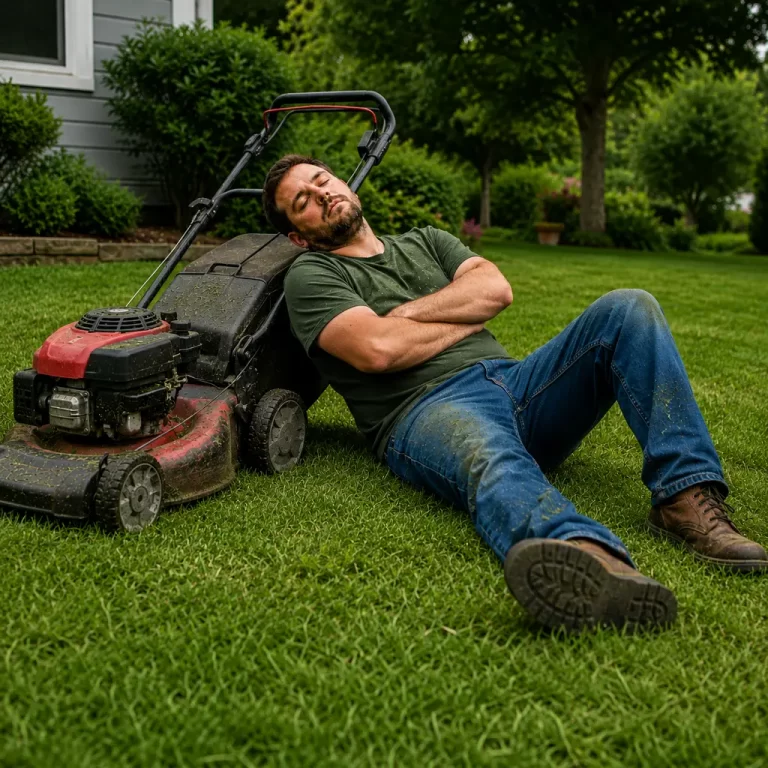
Someone is mowing the lawn.
Someone is drinking a flat white.
Someone is posting their morning run on Instagram.
And you’re lying in bed wondering whether your calf has just developed its own personality.
But you don’t have to carry the physical toll of the trenches alone.
Step through the airlock into The Asylum Sanctuary — our private, deliberately moderated digital space for frontline night-shift workers.
Drop the professional filter.
Share the ridiculous stories.
Share the physical survival hacks.
Share the pitch-black humour.
Connect with people who understand why getting home after a twelve-hour shift can feel like returning from another planet.
The Sanctuary is free to join and designed to remain independent from corporate advertising. The Owl Nurse helps support the work behind it.
No corporate wellness poster telling you to “just stretch.”
No daytime person telling you:
“Have you tried going to bed earlier?”
Just the night shift.
Just the truth.
Just your coven.
Your legs survived the shift.
Now let them rest.
Note: The Facebook Group is our temporary launch incubator. Our fully private custom platform is under construction right here on the website!