The 3 AM Snack Attack — How to Stop Eating Like a Trash Panda on the Night Shift
📜 THE FORGOTTEN SCROLLS: CHRONOLOGY OF THE NIGHT WATCH
The 3 AM Snack Attack — How to Stop Eating Like a Trash Panda on the Night Shift
A darkly practical guide to surviving the vending machine when your body clock has completely left the building.
It’s 3:15 AM.
You’ve survived the witching hour.
Your veins are approximately 40% coffee, 30% adrenaline and 30% regret.
Then you walk into the staff room.
There it is.
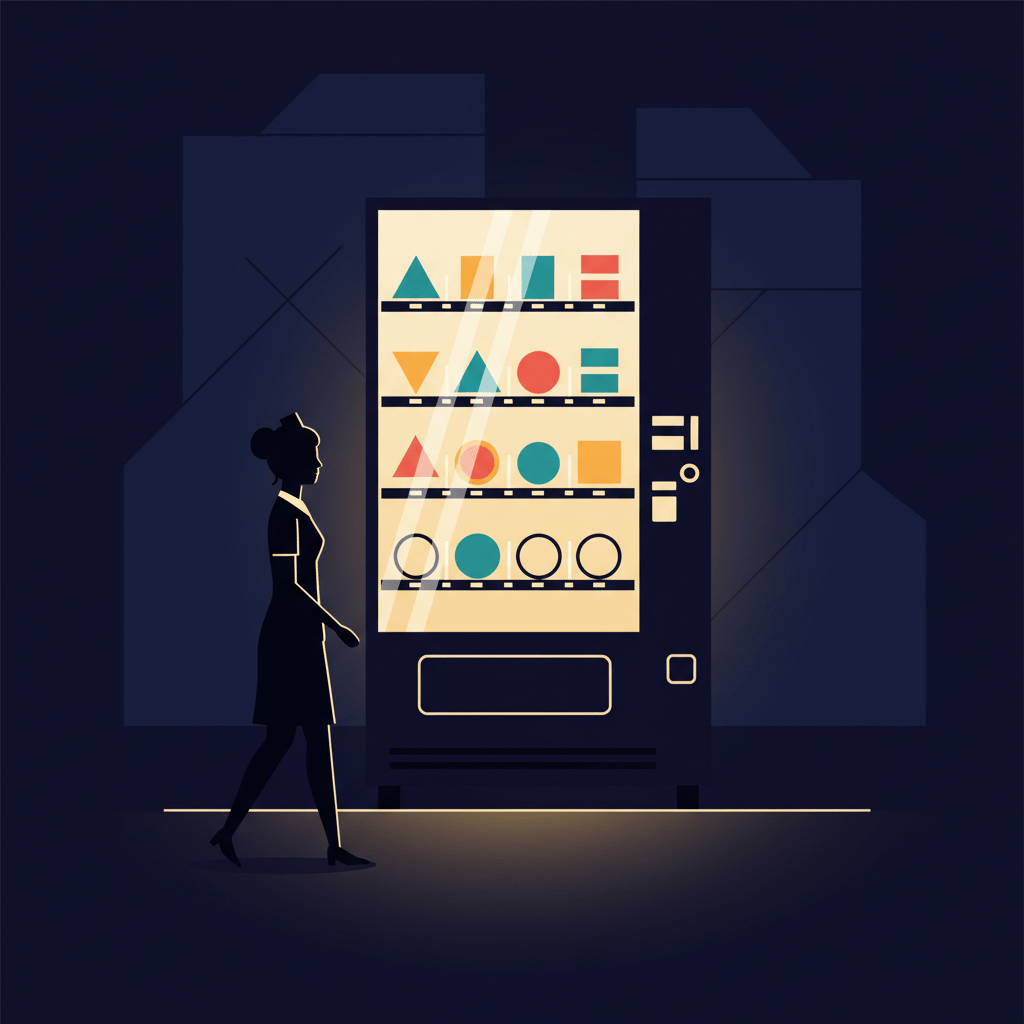
The vending machine.
Glowing.
Waiting.
The crisps are calling.
The chocolate bar looks strangely medical.
Somebody has left cold pizza in the fridge since the previous shift, and although you know perfectly well this is a terrible idea…
you are tired.
Very tired.
And suddenly that pizza looks like a clinical intervention.
Welcome to Trash Panda Syndrome.
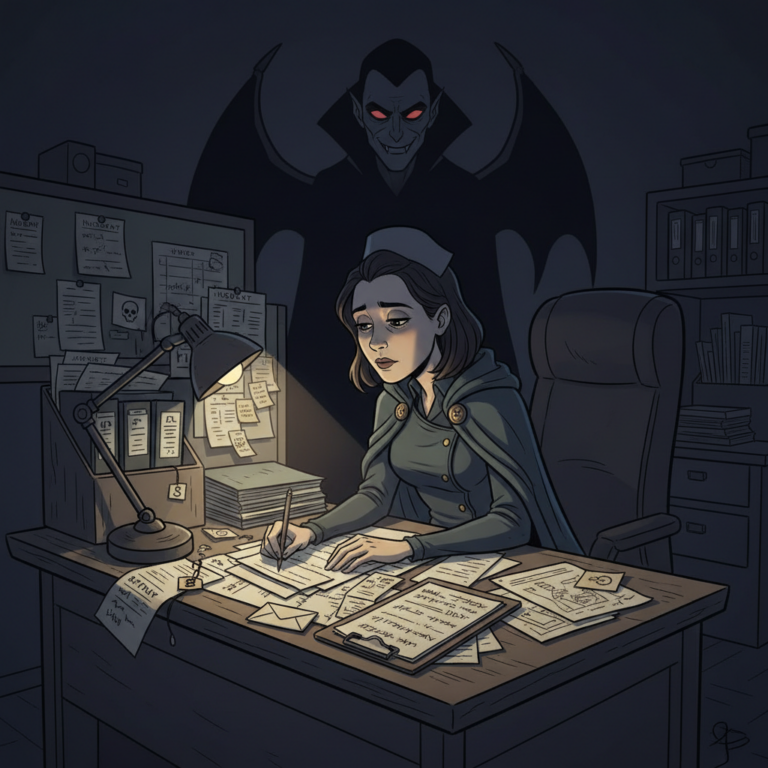
The unofficial condition of the night-shift nurse who spends twelve hours caring for everybody else and then stands in front of a vending machine at 3:00 AM having a serious internal debate about whether a packet of crisps counts as a food group.
Unfortunately, your biology is not entirely on your side.
But honestly?
Sometimes it isn’t even biology.
Sometimes you’re just hungry.
And sometimes you’ve been running around a hospital for eight hours and the only person who remembered to feed you was the vending machine.
🦝 The 3 AM Snack Chaos
Night-shift eating is complicated.
You’re awake when your body would normally be asleep.
You’re tired.
You’re busy.
Your meal times are upside down.
And the food available at 3:00 AM is rarely a beautifully prepared Mediterranean masterpiece.
It’s usually:
crisps,
biscuits,
chocolate,
cold pizza,
or something from a vending machine that has been sitting behind glass since approximately the Bronze Age.
Research suggests that shift work can disrupt meal timing and dietary patterns, while eating during the biological night can produce different metabolic responses than eating during the day. Shift workers also tend to experience changes in meal timing, eating windows and food choices.
But here’s the part the scientific papers don’t always capture:
you are standing in that staff room because you have been working for hours.
You might have missed your break.
You might have eaten half a sandwich while answering a call bell.
You might have forgotten to drink anything except coffee.
You might simply be hungry.
That matters too.
So let’s stop treating every 3 AM snack like a personal moral failure.
🧠 Why Your Brain Turns Into a Tiny Food Goblin
Sleep loss and circadian disruption can affect appetite regulation, food intake and metabolic responses. Sleep loss and circadian disruption can affect appetite, food intake and metabolic regulation. The biology is complicated, but the practical problem is much simpler: you’re tired, you’re hungry, and someone has just opened a packet of crisps three meters away.
This is not exactly a fair fight.
You also don’t make your best food decisions when you’re exhausted.
Nobody stands in front of a vending machine at 3:00 AM thinking:
What would be the most nutritionally sophisticated decision for my long-term metabolic health?
You think:
“I need food.”
And frankly, sometimes you do.
The trick isn’t to become perfect.
It’s to make the better option easier to reach.
🛡️ THE SHIFT-WORKER’S COUNTER-ATTACK
You don’t need a complicated bio-hacking protocol.
You need food that is actually there when you’re hungry.
And ideally, food that doesn’t make you feel like you’ve swallowed a concrete block before the final two hours of your shift.
1. Eat Before the Vampire Shift Starts
One of the easiest ways to lose the 3:00 AM battle is to arrive at work already starving.
Then, six hours later, the vending machine becomes your nutritional consultant.
Don’t do that to yourself.
Before your shift, aim for a proper meal that works for you:
protein + fibre-rich carbohydrate + vegetables or fruit + some healthy fat.
Nothing magical.
Just actual food.
If you know you’ll be hungry during the shift, pack something before you leave home.
Because at 3:17 AM, your future self is not going to thank you for your excellent intentions.
Your future self wants a sandwich.
Give the poor creature a sandwich.
2. Stop Treating 3 AM Like a Second Birthday
You don’t have to ban food during the night.
And you don’t have to force yourself to fast just because somebody online has discovered intermittent fasting and would like everyone else to suffer with them.
Current research suggests that the timing of food intake may matter for metabolic health in shift workers, and reducing some food intake during the biological night may have benefits in certain circumstances. But the evidence is still developing, and there is no single eating schedule that works for every night-shift worker.
So don’t turn this into another rule that makes your life miserable.
Instead, ask yourself:
Am I actually hungry?
If yes, eat.
You’re allowed.
If you’re exhausted and craving sugar because you’ve been awake all night, pause for a moment and see whether your planned snack actually hits the spot.
Drink some water.
Step away.
Have the snack you packed.
And if you still want the chocolate?
Have the chocolate.
One chocolate bar did not personally destroy your circadian rhythm.
3. Build a Better Emergency Snack Arsenal
The best night-shift snack is often the one you actually remembered to bring.
Try things like:
- Greek yogurt
- fruit
- nuts or seeds
- wholegrain crackers
- hummus and vegetables
- a simple sandwich
- cheese and fruit
- a protein-rich snack that suits your dietary needs
Nothing glamorous.
Nothing Instagram-worthy.
Just food.
The kind of food that survives in your bag and doesn’t require you to negotiate with a vending machine while half your brain is asleep.
And if you forget your food?
Don’t beat yourself up.
It happens.
The important thing is to make preparation easier next time.
4. Respect the Night-Time Metabolic Problem
This is where the science gets genuinely interesting.
Studies comparing similar meals eaten during the day and at night have found differences in glucose and insulin responses, with glucose tolerance generally poorer during the biological night.
That does not mean:
“Never eat after midnight.”
Real nursing is not a laboratory experiment.
You may be working for twelve hours.
You may have diabetes.
You may have medication that needs to be taken with food.
You may simply be starving after spending the night moving patients around a hospital.
It means that when you eat may matter, particularly when substantial meals become a regular feature of your biological night.
Recent reviews suggest meal-timing strategies may have potential metabolic benefits for shift workers, but the evidence is not yet strong enough to prescribe one universal “night-shift diet.”
Which is fortunate.
Because the last thing nurses need is another complicated protocol printed on laminated paper.
5. Don’t Let the 30-30-30 Internet Goblin Boss You Around
You’ve probably seen the 30-30-30 rule:
30 grams of protein within 30 minutes of waking, followed by 30 minutes of low-intensity exercise.
It sounds wonderfully precise.
Almost suspiciously precise.
But there isn’t good evidence that this exact combination is a special metabolic reset or universal weight-loss protocol.
And for a night nurse waking at 3:00 PM after a brutal sleep?
You don’t need another rule screaming:
YOU HAVE 30 MINUTES TO FIX YOUR METABOLISM.
Eat a sensible meal.
Move your body when you feel able.
Build a routine that fits your shift.
You do not need to turn waking up into a military operation.
6. Sardines Are Excellent. They Are Not Sacred.
I like sardines.
They’re nutritious.
They’re a useful source of protein and omega-3 fatty acids, and they can absolutely belong in a healthy diet.
But you do not need to eat one can every day because somebody online has declared the sardine a biological repair kit.
Have sardines if you like them.
Have eggs.
Have yogurt.
Have beans.
Have fish.
Have whatever combination of nutritious foods fits your life, culture, budget and dietary needs.
Your brain will not collapse because Tuesday was not Sardine Day.
7. Be Careful With the “Natural Digestion Hacks”
This is another place where the original bio-hacking claims need to go into the bin.
Apple cider vinegar is not a proven treatment for night-shift indigestion or reflux. Because it is acidic, it can actually irritate the esophagus and contribute to dental enamel erosion.
So if you’re lying awake after a 4:00 AM meal with heartburn, the answer isn’t necessarily:
“MORE VINEGAR.”
Please don’t turn your stomach into a chemistry experiment.
Likewise, sugar-free sweeteners such as erythritol can be useful for some people who want to reduce added sugar, but they aren’t a magical “sugar bypass” that guarantees perfect glucose control.
Nutrition is annoyingly less cinematic than TikTok.
There is no secret liquid that makes 3:00 AM physiologically normal.
🥪 THE ACTUAL NIGHT-SHIFT FOOD PLAN
Forget the laboratory.
Try this.
Before the shift
Eat a proper meal.
Don’t arrive starving.
During the first half
If you’re hungry, eat something planned rather than waiting until you’re desperate.
Around 2–4 AM
Stop for ten seconds.
Ask:
Am I hungry?
If yes — eat.
If you’re exhausted and craving sugar because you’ve been awake all night, try water and your planned snack first.
And if you still want the chocolate?
Eat it.
You are a human being, not a glucose-monitoring robot.
Before going home
Don’t automatically turn the last hour of your shift into a second dinner unless you actually need it.
And remember:
coffee is not breakfast.
I know.
This is personally offensive information.
🦷 THE STRANGELY EFFECTIVE LITTLE TRICK
Brush your teeth after your main meal if practical.
Not because mint possesses mystical anti-snack powers.
Simply because it creates a psychological signal:
Kitchen closed.
It also helps with oral hygiene.
And if you’re still genuinely hungry ten minutes later?
Eat.
We’re nurses.
Not monks.
🌙 THE REAL GOAL
The goal isn’t to become the perfect night-shift eater.
You will occasionally eat crisps.
You will occasionally eat chocolate.
Someone will bring cake into the staff room at 2:40 AM.
You will eat the cake.
This is not a moral failure.
The goal is to stop the entire night becoming one long negotiation between exhaustion and the vending machine.
Prepare food.
Drink enough.
Eat proper meals.
Keep satisfying snacks nearby.
Notice what makes you feel better — and what makes the final hours of the shift miserable.
And remember that sleep and circadian timing are part of the metabolic picture too. Shift work affects much more than the number on the clock.
Sometimes the most sophisticated nutritional strategy is surprisingly boring:
bring food from home.
I know.
Revolutionary.
This is general information, not personalized nutrition advice. If you have diabetes, reflux, an eating disorder, gastrointestinal disease, are pregnant, or take medication affected by food timing, your needs may be different. Speak with your own clinician or registered dietitian for individual advice.
🚪 ACCESS THE AIRLOCK: JOIN THE MIDNIGHT COVEN
When the hunger beast strikes anyway, remember:
you are not the only one standing in front of the vending machine at 3:15 AM wondering whether a Boost bar technically qualifies as a food group.
We’ve all been there.
Before you surrender completely to the corporate sugar shrine, step through the airlock into The Asylum Sanctuary — our private digital space for frontline night-shift professionals.
Drop the filter.
Share the ridiculous stories.
Talk about what actually happens at 3:00 AM.
Laugh with people who understand why the staff-room fridge becomes a crime scene after midnight.
It is free, independent and supported by The Owl Nurse.
Bring your coffee.
Bring your snacks.
Bring your slightly questionable night-shift decisions.
The coven is waiting. 🦉
Note: The Facebook Group is our temporary launch incubator. Our fully private custom platform is under construction right here on the website!