Sleep + Circadian Reset
📜 THE FORGOTTEN SCROLLS: Chronology of the Night Watch
SCROLL FOUR: THE VAMPIRE GUIDE TO DAYTIME SLEEP
How to Force Your Brain Into Night Mode When the Sun Is Being Rude
For most people, sunrise is a beautiful wake-up call.
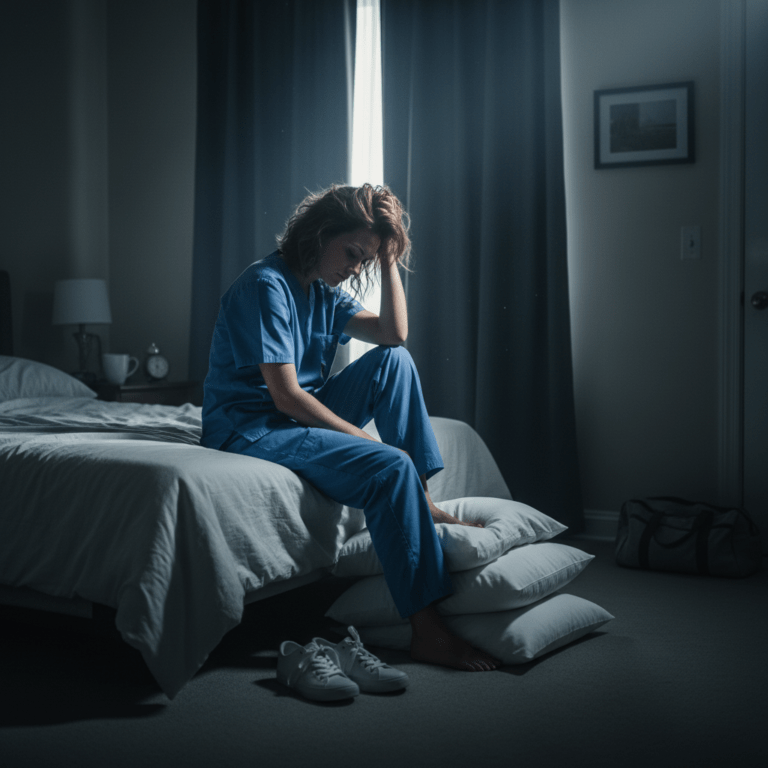
For a nurse finishing a gruelling 12-hour shift, it is a personal insult.
You stumble out of the hospital, eyes burning like you just blinked at holy water. You drive home while the local birds perform a cheerful morning concert that makes you question whether they have ever worked a night shift in their lives.
You are physically dead, running on coffee and clinical adrenaline since midnight.
Yet the moment your head hits the pillow, your brain throws a rave.
This is not necessarily a lack of discipline.
It is biology.
Your body runs on an internal timing system known as the circadian rhythm. It helps regulate sleep and wakefulness, hormone rhythms and other daily biological processes. Light is one of the strongest signals that helps set this clock.
Unfortunately, your circadian system was not designed around rotating night shifts, hospital staffing crises or the deeply optimistic belief that a nurse can simply go home at 8 AM and “sleep normally.”
The good news?
Your circadian rhythm is stubborn.
But it can be influenced.
And that is where the Vampire Shift begins.
☀️ WHY DAYLIGHT IS THE ENEMY OF DAYTIME SLEEP
Your brain is a microscopic light detective.
When light reaches your eyes, it sends powerful timing signals to the brain. Light exposure can suppress melatonin production and influence the circadian system, while cortisol naturally rises around the time your body prepares for waking.
For a normal daytime person, this is excellent engineering.
For a night-shift nurse standing outside the hospital at 8 AM after twelve hours of work?
Less excellent.
You are trying to tell your brain:
“Please shut everything down. I have another twelve hours of nonsense to survive later.”
And the sun is standing there shouting:
“GOOD MORNING!”
For night-shift workers, daytime sleep is already fighting against the body’s normal circadian timing. Research shows that many night workers do not fully adapt their melatonin rhythm to their daytime sleep schedule, and daytime sleep is often shorter and less satisfying than normal nighttime sleep.
So yes.
Tired but wired is real.
And no, you are not failing at sleep because you couldn’t switch your brain off like a bedside lamp.
🛡️ STEP ONE: BUILD THE PERFECT CRYPT
If you want to sleep during daylight, your bedroom needs to stop behaving like daytime.
It needs to become a crypt.
Preferably one with better ventilation.
Your bedroom should be cool, quiet and dark — exactly the kind of environment recommended for improving sleep, with particular importance for shift workers trying to sleep during the day.
- Blackout Curtains: Close them properly and minimise light leaking around the edges. The Irish sun is annoyingly persistent.
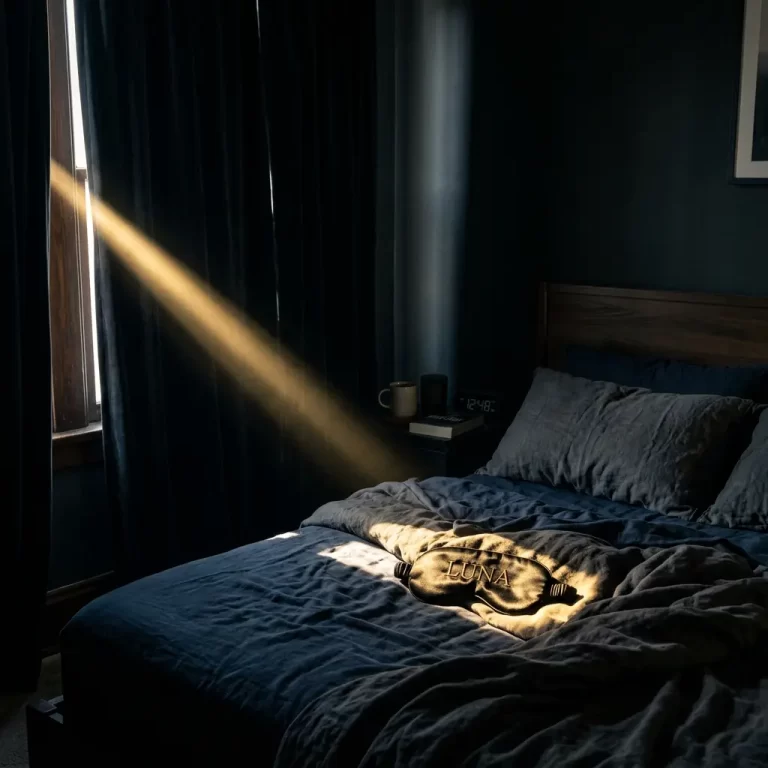
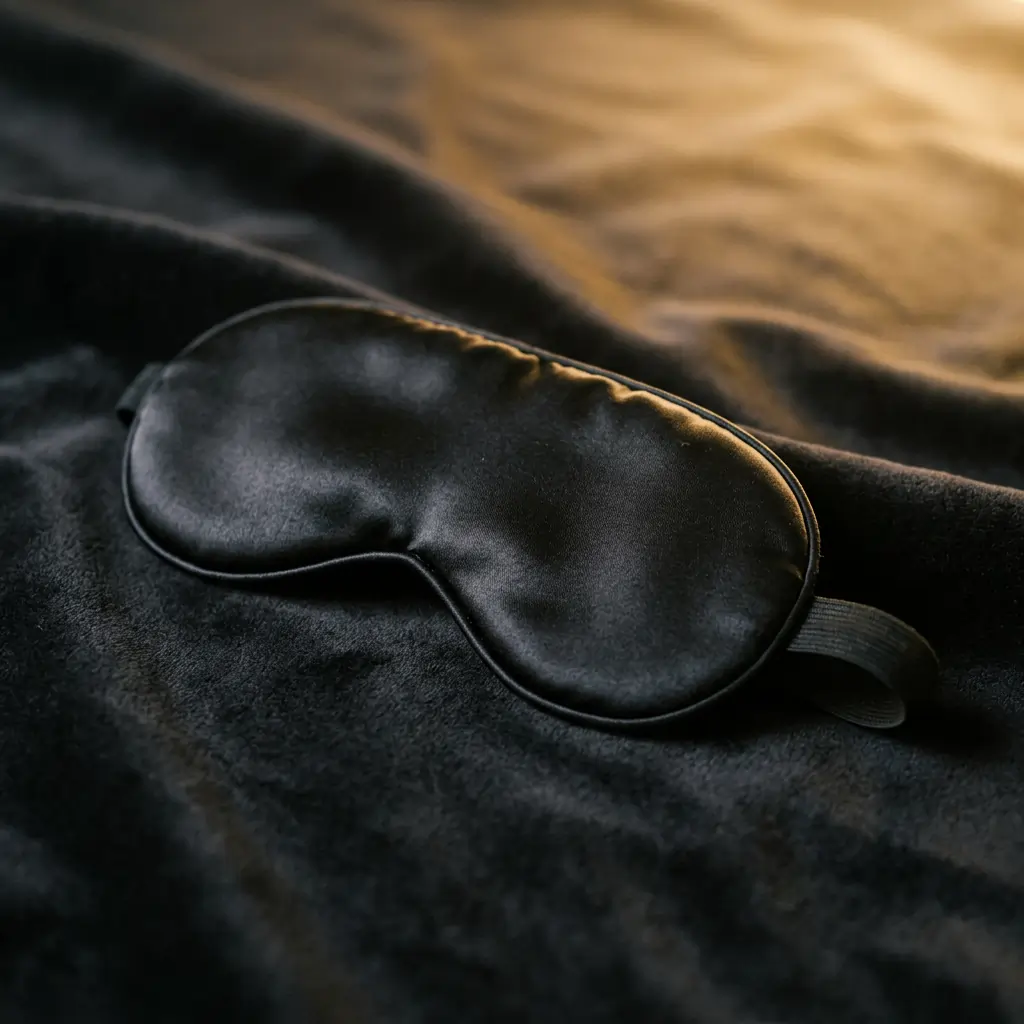
- The Eye Mask: If daylight is still finding you, a comfortable eye mask adds another layer of darkness.
- Cool Temperatures: Keep the bedroom comfortably cool rather than turning it into a tropical ward.
- White Noise: A fan, white-noise machine or another consistent background sound can help mask unpredictable daytime noise.
Because sometimes the greatest threat to your REM cycle is not your circadian rhythm.
It is Seamus and his lawnmower.
🧪 STEP ONE-B: LOWER THE NOISE — INCLUDING THE ONE INSIDE YOUR HEAD
One of the biggest challenges after a difficult night shift is that your body may be exhausted while your brain is still operating in clinical-alert mode.
You have spent twelve hours responding to alarms, call bells, deteriorating patients, medication rounds, interruptions and ward politics.
You walk through your front door.
Your shift is over.
Your nervous system apparently didn’t get the memo.
Create a predictable post-shift routine that tells your brain the hunt is over.
Dim the lights.
Keep the environment quiet.
Avoid stressful conversations if you can.
Take a warm shower if it helps you unwind.
And think carefully about caffeine as the end of your shift approaches.
The goal is not to force sleep.
It is to stop giving your brain reasons to remain awake.
🛡️ STEP TWO: DEPLOY THE CORTISOL SHIELD
When you spend twelve hours dealing with crashing patients, endless call bells and the occasional episode of ward politics worthy of its own Netflix series, it is understandable that you may feel mentally switched on long after the shift ends.
This is where the internet usually starts throwing the word “adaptogen” around like it has discovered a magical escape hatch.
Let’s slow down.
Some studies suggest that certain ashwagandha preparations may help with stress or insomnia, but the evidence is still limited and varies considerably between preparations and studies. The safety picture also matters: ashwagandha can cause side effects, has been linked to rare cases of liver injury, and may interact with medicines. It is not recommended during pregnancy or breastfeeding and may be unsuitable for people with thyroid or autoimmune conditions.
So:
interesting botanical? Yes.
Magical cortisol assassin? No.
And that distinction matters even more when you are talking to healthcare workers who may already be exhausted enough to believe anything promising eight uninterrupted hours of sleep.
Adaptogenic Support
If you are considering an ashwagandha product, look at the specific preparation, evidence and safety information rather than assuming that every bottle containing the word Ashwagandha is interchangeable.
And if you take medication or have an underlying condition, talk to an appropriate healthcare professional before adding it to your routine.
L-Theanine and Other Calming Ingredients
L-theanine and other ingredients are often marketed for relaxation and sleep support.
Evidence varies by ingredient and indication, so I would treat these as optional tools, not guaranteed sleep solutions.
The same rule applies:
Your supplement cupboard is not Batman.
Mindfulness Decompression
This one costs absolutely nothing, which is probably why nobody sends you a corporate email about it with a discount code.
Slow breathing, progressive muscle relaxation or a short decompression routine may help you transition from work mode towards rest.
No crystals required.
Unless you like crystals.
Then, by all means, bring the crystals.
A NOTE ABOUT ASHWAGANDHA AND THE OWL NURSE
Because this is an article connected to a commercial health brand, I want to be particularly careful here.
Food supplements sold and advertised in Ireland are subject to EU and Irish rules governing nutrition and health claims. Claims about supplements cannot simply say or imply that a product prevents, treats or cures disease, and health claims used in commercial communications need to comply with the applicable EU framework.
So we can talk about the science, the evidence and the experience of night workers.
We should not promise that a supplement will treat insomnia, cure anxiety, lower pathological cortisol or fix a damaged circadian rhythm.
That’s not boring legal nonsense.
That’s protecting the credibility of the brand.
And frankly, we’ve already got enough nonsense on the internet.
STEP THREE: SLAM ON THE BRAKES WITH MAGNESIUM
Magnesium is an essential mineral involved in many physiological processes, including normal nervous-system and muscle function.
It is also one of the supplements most frequently discussed in the sleep world.
Andrew Huberman has discussed magnesium threonate and magnesium bisglycinate in the context of sleep and relaxation, including possible effects on sleep onset and GABA-related mechanisms.
But here is where I want to draw a line.
Magnesium is not a sleeping pill.
And it certainly isn’t a remote control for your nervous system.
The evidence for magnesium supplementation as a general sleep solution is not strong enough to turn it into a guaranteed promise.
So if you use magnesium as part of your routine, think of it as one piece of the puzzle, not the entire puzzle.
Because no matter how beautiful the bottle is, it cannot replace sleep.
⛓️ THE REAL SECRET TO A CIRCADIAN RESET
There is no single trick that turns a night-shift nurse into a nocturnal superhero.
The most sensible approach is layered:
Control the light.
Protect the bedroom.
Reduce unnecessary noise.
Create a predictable post-shift routine.
Think carefully about caffeine timing.
Give yourself enough opportunity to sleep.
And if you are considering supplements, treat them as supplements — not as replacements for the boring fundamentals.
For shift workers, guidance from the NHLBI specifically recommends strategies such as keeping the sleep environment cool, quiet and dark, limiting caffeine closer to sleep, managing light exposure and reducing sound and light distractions during daytime sleep.
That is considerably less glamorous than a miracle capsule.
It is also considerably more believable.
Survived another Vampire Shift?
Don’t let the sunrise win.
Reclaim your rest.
Protect your sanity.
And remember:
Your daytime sleep is not a luxury.
It is recovery.
🚪 ACCESS THE AIRLOCK: RECLAIM YOUR NIGHT MODE
The daytime world doesn’t care that you just spent twelve hours keeping people alive in the dark.
They will ring your doorbell.
They will mow the lawn.
They will blast music.
They will send you messages.
And sooner or later, someone will cheerfully tell you:
“Why don’t you just sleep at night?”
Because apparently nobody read the rota.
But you don’t have to fight this biological battle alone.
Before the morning light completely takes over, step through the airlock into The Asylum Sanctuary — our private, deliberately moderated digital space for frontline night-shift workers.
Drop the professional filter.
Share the pitch-black humour.
Tell the stories that only another night worker will understand.
Talk about the shift that went completely sideways.
Talk about the ridiculous things that happen at 3 AM.
Talk about surviving another week when your biological clock is filing formal complaints against your employer.
The Sanctuary is free to join and designed to remain independent from corporate advertising. The Owl Nurse helps support the work behind it.
No forced sunshine.
No corporate wellness slogans.
No pretending that a lavender candle will solve twelve hours of accumulated exhaustion.
Just the night shift.
And the people who understand it.
Take off your sterile gloves.
Close the curtains.
Put your phone on Do Not Disturb.
And tell the daytime world:
“Not now. I’m sleeping.”
Your coven is waiting.
🦉 A NOTE FROM THE NIGHT WARDEN
This Scroll is an educational and personal account of night-shift life and daytime sleep. It is not intended to diagnose, treat or cure insomnia, shift work disorder, anxiety or any other medical condition.
If persistent sleep problems, excessive daytime sleepiness, mood changes or difficulty functioning are affecting your life or your ability to work safely, speak with an appropriate healthcare professional or occupational-health service.
And if you are considering supplements, particularly if you take medication, are pregnant or breastfeeding, or have an underlying medical condition, get individual medical advice before using them.
Because sometimes the most rebellious thing a night nurse can do is admit:
I need sleep.
And protect it.
Note: The Facebook Group is our temporary launch incubator. Our fully private custom platform is under construction right here on the website!