The Sun is Our Kryptonite
📜 THE FORGOTTEN SCROLLS: Chronology of the Night Watch
SCROLL FIVE: THE SUN IS OUR KRYPTONITE
Confessions of a 50-Year-Old Night-Shift Vampire
By Magda, Founder of The Owl Nurse
Let’s drop the professional filter for a second.
If you are a daytime person who stumbled upon this page by mistake, you might want to look away.
This is a raw, uncensored story about what happens to your brain, your family, and your survival instincts when you spend years working the permanent graveyard shift.
I am a 50-year-old nurse with a Master’s degree.
For nearly 20 years, I’ve been locked into a fixed schedule of brutal night shifts in the hospital trenches. My body doesn’t run on a standard biological clock anymore.
It runs on caffeine, pure spite, and clinical adrenaline.
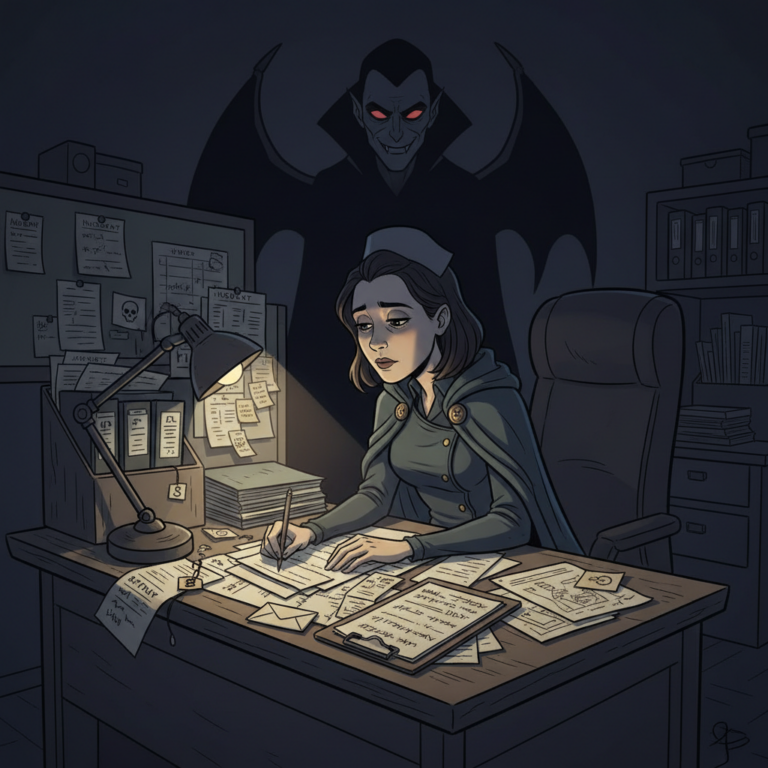
And to me, beautiful, bright, cheerful sunshine isn’t a blessing.
It’s my absolute kryptonite.
But to understand how I ended up hiding from the daylight in a pitch-black room, we have to go back to how this madness actually began.
☘️ THE 2-WEEK COURSE THAT LASTED 20 YEARS
I never planned to build a life in Ireland.
Twenty years ago, at the age of 30, I arrived in Dublin for a simple, two-week English language course at the UCD campus.
I was starting completely from scratch.
Zero English.
But Dublin has a strange, magnetic way of capturing you.
Two weeks turned into a summer holiday on this beautiful island.
I met incredible people, fell in love with the scenery, and decided to stretch my stay for just a few months.
Since I needed a way to survive, I applied to have my nursing diploma recognized in Ireland.
Because of my strong academic background and intensive experience in the Neonatal Intensive Care Unit back home, I was able to progress through the registration process and begin working in Ireland.
I got my job at my current hospital almost entirely by accident.
I was actually speaking to an agency about helping me register as a nurse in the USA when the agent stopped and said:
“You know, there’s a brand-new hospital just opening up in Dublin. You should try there.”
I went for the interview.
My English was so basic that the only sentence I remember vividly from the panel was:
“Magda, please just watch English TV.”
I wasn’t a language genius.
I was terrified.
And because I felt so inadequate with the language, I compensated the only way a wounded healer knows how:
I gave myself entirely to the job.
I buried myself in the work.
The initial team at that new hospital consisted of some of the most brilliant specialists I could have ever dreamed of working alongside.
But as the hospital grew, the organizational pressure expanded.
The faces changed.
The staff dynamic shifted.
The workload became heavier.
Instead of slowing down, I shifted into a higher gear.
I didn’t know how to stop.
I just kept accelerating.
👶 THE DOUBLE SHIFT OF MOTHERHOOD AND THE TRAP OF “HAVING IT ALL”
Then came the pregnancies.
Two beautiful teenage daughters who are now a chaotic whirlwind of their own.
Back then, running on zero sleep, it felt easier to delegate the domestic frontline.
My husband took over the primary childcare duties so I could work even more shifts to sustain our expanding life.
Eventually, my husband said:
Enough.
He wanted a life outside the four walls of our house.
He wanted to return to work, specifically aiming to relieve my financial burden so I could finally step out of the hospital and spend real, quality time with him and our daughters.
But my perfectionist brain completely misinterpreted his gift.
Instead of resting, I added a whole new layer of self-inflicted pressure.
Suddenly, since I wasn’t working six days a week anymore, I decided I had to become the immaculate, bulletproof housewife.
I was cooking three different separate dinners a day to satisfy everyone’s tastes.
I was scrubbing floors.
I was trying to launch a social life.
I was trying to smile through school runs while my internal battery was sitting at exactly 1%.
I was hurtling toward a massive biological and psychological cliff at 100 miles per hour, and I was completely deaf to the people who loved me.
I refused to listen.
I refused to accept help.
I genuinely believed that as a nurse, as a mother, as a woman, I wasn’t allowed to show weakness.
I thought I had to power through.
🧠 THE STANFORD WARNING: YOUR WILLPOWER IS NOT MAGIC
Most night-shift workers know some version of this delusion.
We think our willpower can override our biology.
Dr. Andrew Huberman has discussed the disruption of cortisol rhythms, dopamine-related systems and wellbeing associated with shift work, and specifically discusses night nurses and other essential night workers when explaining the biological challenge of working against the usual sleep-wake cycle.
The problem isn’t that your body is weak.
The problem is that your body is following biology while your roster is following a spreadsheet.
And those two departments do not always communicate.
Research supports the broader picture: shift work is associated with sleep disturbance, fatigue and adverse mental-health outcomes, although the size and certainty of those associations vary between populations and studies. A 2026 systematic review found associations between shift work and insomnia, poor sleep quality, fatigue, stress, anxiety and depression.
Among nurses specifically, a 2023 systematic review and meta-analysis found an association between night-shift work and depression, although the evidence also showed substantial variability between studies.
So yes.
The night shift can take a toll.
But I don’t want to turn that into another piece of internet doom.
Not every night nurse becomes depressed.
Not every person responds to shift work in the same way.
And not every difficult period in a night worker’s life can be blamed on the rota.
For me, however, the combination of years of night work, chronic exhaustion, pressure, perfectionism and trying to be everything to everyone eventually became too much.
Burnout didn’t just tap me on the shoulder.
It slammed me into a heavy, dark clinical depression.
That is my story.
Not a diagnosis for everyone else.
🌙 THE REM SLEEP MYTH I ALMOST BELIEVED
The original version of this story said that cutting daytime sleep short could make you lose 80% of your REM sleep.
That sounded wonderfully terrifying.
It also needed fixing.
REM sleep normally accounts for roughly 20–25% of adult sleep, and REM periods tend to become longer later in a sleep episode. That means repeatedly shortening sleep can disproportionately reduce some of the REM-rich sleep occurring toward the end of the sleep period.
But there isn’t a scientifically defensible universal rule saying:
“Five hours of daytime sleep = 80% REM loss.”
So I’m not going to sell you that one.
Because if we’re going to build this coven around honesty, the science gets to stay in the room.
And the truth is still pretty brutal:
Cutting your sleep short repeatedly is not free.
🕯️ THE DARK NIGHT OF MY SOUL
My body eventually stopped cooperating with the story I had been telling myself.
I could push.
I could work.
I could smile.
I could cook.
I could clean.
I could show up.
I could pretend.
But eventually there was nothing left to push with.
Through some higher spiritual force, and through the immense, unconditional endurance of my family who stood by me through the darkest storms, I didn’t cross that final line.
Turning 50 became my ultimate cosmic wake-up call.
Not because the number itself possesses magical powers.
But because sometimes a milestone forces you to stop and ask the question you’ve been avoiding for years:
How long am I actually willing to live like this?
I stopped running.
I started changing.
🛡️ THE VAMPIRE’S COUNTER-ATTACK: HOW I RECLAIMED MY SANITY
I didn’t fix my life with an automated corporate wellness email or a lavender-scented bath.
I did it with aggressive, ruthless boundary-setting.
If your home life and your joints are currently staging a mutiny after a long rotation, here are the non-negotiable lifestyle protocols that helped save mine:
1. FIRE THE HOUSEWIFE. HIRE THE MACHINES.
The first thing to go was the multi-meal cooking madness.
The kitchen was officially declared a self-service zone for anyone capable of operating a microwave.
Then I systematically automated my survival.
I bought a dishwasher.
A clothes dryer.
A cleaning robot.
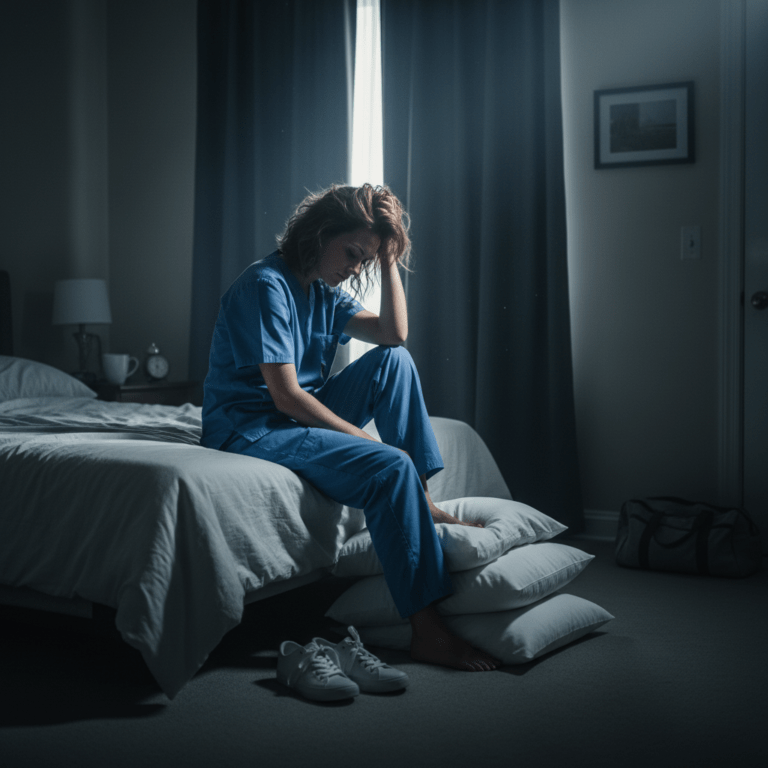
Watching a circular piece of plastic vacuum my living room while I lay in my pitch-black room hiding from the afternoon sun became my ultimate form of therapy.
Honestly?
The robot has contributed more to my mental health than several motivational emails ever did.
But my crowning achievement was gifting myself the absolute Rolls-Royce of coffee machines — a bean-to-cup masterpiece that grinds out coffee at the push of a button.
If the daylight world is going to disrupt my biology, my caffeine line is going to be pure luxury.
But here’s the part I eventually learned:
Coffee is a tool. It is not a substitute for sleep.
And if your caffeine is regularly sabotaging your daytime sleep, the vampire needs to rethink the feeding schedule.
Stop trying to be a 1950s housewife when you are working 21st-century graveyard shifts.
Protect your hours like a fortress.
2. THE THREE-NIGHT BORDER CONTROL
The staffing crisis is a trap for compassionate people.
Hospitals will always need more staff.
There will always be another gap.
Another sick call.
Another colleague who needs cover.
Another:
“Could you possibly just…?”
I drew a hard line:
Three nights a week. No more.
I stopped volunteering for extra shifts.
I started using my annual leave to actually recover.
This wasn’t laziness.
It was a boundary.
And boundaries are sometimes the only thing standing between a compassionate healthcare worker and complete exhaustion.
3. BIOLOGICAL DEFICIT PROTECTION
This is where I want to be brutally honest.
Magnesium became part of my own thinking about recovery, but I don’t want to pretend that Magnesium Glycinate is an “off switch” for the human nervous system.
The evidence around magnesium and sleep is still developing. A 2024 systematic review found some positive findings across studies but also substantial inconsistency, and evidence specifically supporting magnesium glycinate for sleep remains limited.
So if magnesium is part of your routine, think of it as one possible piece of the puzzle.
Not the puzzle.
Definitely not the superhero.
And absolutely not permission to sleep four hours and then announce:
“It’s fine. I took magnesium.”
No.
Your body is not that easily bribed.
🚪 ACCESS THE AIRLOCK: THE COVEN IS OPEN
Today, my house isn’t always immaculate.
My teenagers occasionally have to forage for their own survival.
But I am waking up.
I am reading.
I am listening to books.
And for the first time in 20 years…
I am thinking about myself.
That sentence still feels slightly rebellious.
Every single night-shift nurse standing on that freezing hospital corridor at 4:00 AM is carrying an immense, heavy edge.
You don’t have to carry that weight alone in the dark.
And you certainly don’t have to pretend you’re doing fine to a world that sleeps through your warfare.
I’m building The Asylum Sanctuary into a private, deliberately moderated digital space for frontline night-shift staff.
For now, our Facebook group is the first open door, a place to start connecting, sharing experiences, and building the community together.
Drop the professional filter.
Join your coven.
Share the raw truth.
Share the pitch-black humor.
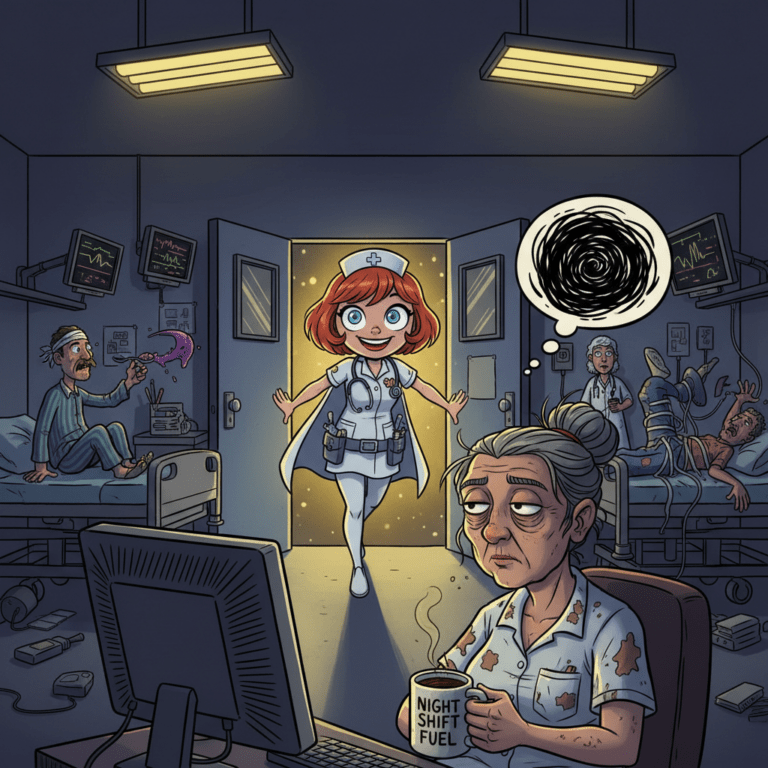
Share the stories that only make sense to people who have stood under fluorescent hospital lights at 4 AM wondering whether they are still a human being or have officially become part of the ward furniture.
The Sanctuary is free to join and designed to remain independent from corporate advertising. The Owl Nurse helps support the work behind it.
No corporate wellness theatre.
No pretending that a motivational poster can repair twenty years of exhaustion.
No pretending that being a good nurse means sacrificing every last piece of yourself.
You survived another shift.
You are allowed to protect what is left of you.
Your coven is waiting.
🦉 A NOTE FROM THE NIGHT WARDEN
This Scroll combines personal memoir, nursing experience, humor and general educational information about night work, sleep and recovery.
My experience of depression is my own story and should not be interpreted as evidence that night-shift work inevitably causes depression in every worker.
Research does show associations between shift work, disrupted sleep and adverse mental-health outcomes, but individual risk varies and the evidence is not identical across every occupation or shift pattern.
If persistent depression, anxiety, severe exhaustion, sleep problems or thoughts of self-harm are affecting you, please seek appropriate professional help rather than trying to vampire your way through it alone.
And if you’re struggling with night-shift fatigue:
You don’t have to prove that you’re strong enough to destroy yourself.
Sometimes the strongest thing a nurse can do is stop saying yes.
Note: The Facebook Group is our temporary launch incubator. Our fully private custom platform is under construction right here on the website!