An Honest Survival Guide to Sleeping When the Sun is Being Rude
📜 THE FORGOTTEN SCROLLS: Chronology of the Night Watch
AN HONEST SURVIVAL GUIDE TO SLEEPING WHEN THE SUN IS BEING RUDE
The Biological Cost of Your Shift
Here is something they don’t include in the nursing college prospectus:
The hardest part of the night shift isn’t always the shift itself.
It’s going home.
It’s walking out into the blinding 8:00 AM sunlight while civilian humanity is walking dogs, sipping flat whites, and looking disgustingly fresh.
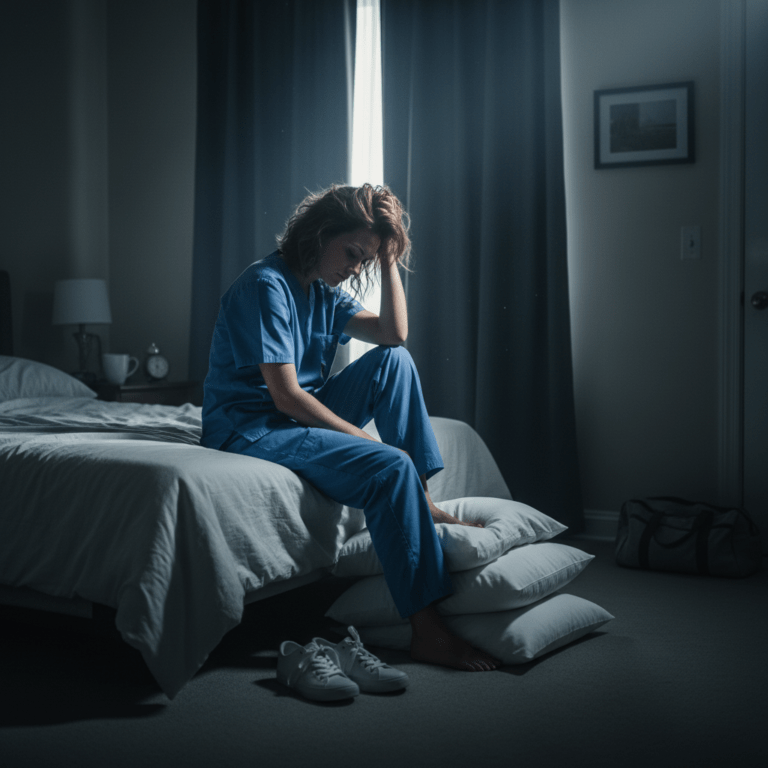
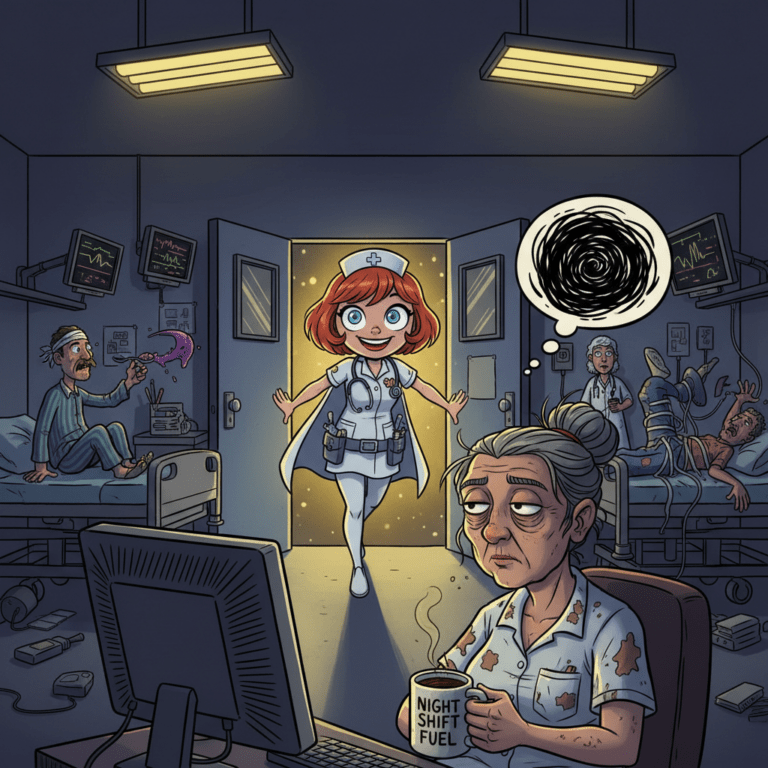
Meanwhile, you are driving home on pure adrenaline, locking yourself behind blackout blinds, and staring at the ceiling while your brain aggressively recalls every embarrassing clinical mistake you’ve made since 2009.
Society loves to call us night angels or heroes in scrubs.
It’s a lovely sentiment.
But let’s pull back the curtain for a moment.
Night work asks your body to remain awake during the biological night and then sleep while the rest of society is doing the exact opposite.
Your circadian system did not receive the rota.
It was not consulted.
And frankly, it has filed a complaint.
🧠 THE CIRCADIAN PROBLEM: YOUR BODY DID NOT SIGN THE ROTA
Satchin Panda’s work on circadian biology highlights an important reality: regular night-time wakefulness and irregular sleep schedules can put real pressure on the body’s internal clock.
You don’t necessarily need to spend your entire career working permanent nights before your biological clock starts noticing that something has gone horribly wrong with the scheduling department.
And Panda makes a broader point about modern life:
Many of us behave like shift workers without ever putting “shift worker” on our job description.
Late nights.
Early mornings.
Screens.
Irregular meals.
Travel.
Weekend sleep-ins.
And the occasional 3 AM decision that seemed completely reasonable at the time.
Your circadian rhythm isn’t confused because it is weak.
It is responding to the signals you keep giving it.
The problem is that night nurses are giving it some particularly contradictory ones.
🌙 THE DAYTIME SLEEP TRAP
At 8 AM, you are exhausted.
At 8:15 AM, the sun is announcing the arrival of civilisation.
At 8:30 AM, someone is walking a dog directly underneath your bedroom window.
At 9 AM, a delivery driver is ringing your doorbell with the confidence of a man who has never worked a night shift.
At 10 AM, your phone decides you need seventeen notifications.
At 11 AM, your brain finally starts wondering whether sleep is still on the agenda.
And somewhere outside:
BRRRRRRRRRRRRRR.
The lawnmower.
Because apparently Seamus has chosen today.
Again.
Daytime sleep really can be harder to protect. Shift-work guidance notes that daytime sleep tends to be lighter, shorter and more vulnerable to disturbance from light, noise and temperature. Blackout blinds, eye shades, reducing noise, managing phone interruptions and asking household members or neighbours to respect your sleep period are all practical strategies recommended for shift workers.
So no.
You’re not being precious.
You’re trying to sleep while the entire neighbourhood has decided to begin its daytime programme.
🧠 A BRAIN RUNNING ON EMPTY
The dangerous part of sleep deprivation is that exhaustion doesn’t always come with a perfectly calibrated warning system.
Research into chronic sleep restriction has shown that people can become accustomed to the feeling of being tired while their objective cognitive performance continues to deteriorate. In one landmark laboratory study, participants restricted to four or six hours of sleep for two weeks developed substantial cumulative performance deficits, while their subjective sleepiness increased much less dramatically after the initial days.
That is the nasty little trick of sleep deprivation:
You can become worse at judging how impaired you are while simultaneously becoming more confident that you’re coping.
Other research has found that subjective alertness alone is not a particularly reliable measure of objective performance, especially during the biological night.
Which is a particularly terrible combination when your job involves medication, clinical judgement, patient deterioration and decisions that cannot be undone with the Undo button.
And yes, that deserves respect.
Not panic.
Not doom.
Respect.
Because if you work nights, the question isn’t whether you are tough enough.
The question is whether you are giving your brain enough opportunity to recover.
🧬 YOUR SLEEP IS NOT ONE SINGLE THING
There is another myth worth killing.
Sleep is not one uniform block of unconsciousness.
It moves through different stages of NREM and REM sleep in repeating cycles.
REM sleep generally makes up around 20–25% of total adult sleep, with more REM tending to occur during the later part of a normal sleep period.
So cutting your sleep short doesn’t simply mean:
“I lost two hours.”
You may also be changing the architecture and timing of the sleep you actually get.
That matters.
And this is precisely why I don’t love the old internet claim that “five hours of sleep means you’ve lost 80% of your REM.”
It sounds wonderfully terrifying.
It is also far too neat.
Human sleep is considerably more complicated than that.
So when you wake yourself after five hours because the house needs cleaning, the children need something, the supermarket needs visiting and apparently civilisation cannot survive without you for another forty-five minutes…
Your body may have a different opinion.
The house can wait.
The laundry has never suffered emotional trauma because it was folded tomorrow.
🛡️ HARD-WON SURVIVAL TACTICS FOR THE NIGHT-SHIFT COVEN
The system may not redesign itself around your biology.
So, unfortunately, we have to become our own defence department.
1. WEAPONISED BLACKOUT TACTICS
Standard curtains are optimistic.
The Irish sun is not.
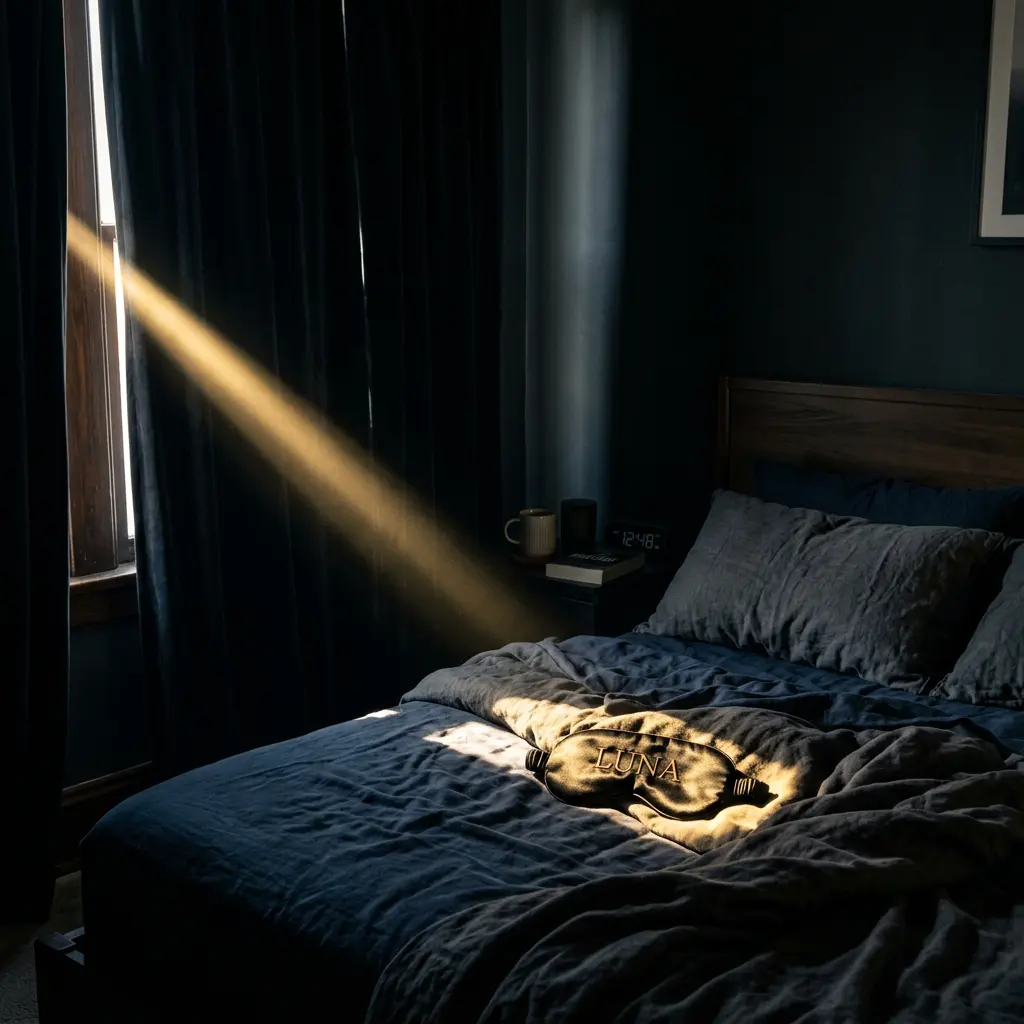
If you want to sleep during daylight hours, make your bedroom as dark as reasonably possible.
The Fix
Use properly fitted blackout blinds or curtains that minimise light leakage around the edges.
The Layer
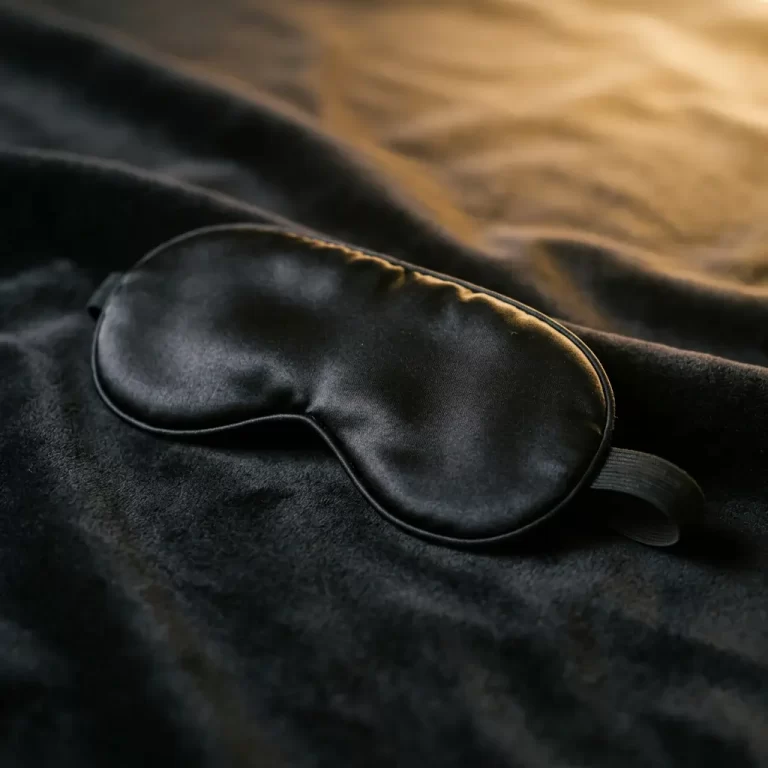
Add a comfortable eye mask if necessary.
You may look like a budget Batman villain.
But villains get great sleep.
And unlike Batman, you have a twelve-hour shift tomorrow.
2. AGGRESSIVE PHONE MANAGEMENT
Your phone is a tiny electronic traitor.
One:
“Just checking in!”
message at 11 AM can be enough to pull you out of a fragile sleep period.
You don’t need to become unreachable.
You need to become selectively reachable.
The Fix
Use Do Not Disturb or your phone’s equivalent.
Allow genuinely important contacts through.
Silence everything else.
The Location
Put the phone somewhere that requires actual physical effort to reach.
Because the sleep-deprived brain is a negotiator.
It will tell you:
“I’m only checking one notification.”
Thirty-seven minutes later you’re watching a video about a man restoring a 1974 lawnmower in Nebraska.
You don’t even like lawnmowers anymore.
3. BUILD A DECOMPRESSION BUFFER
You cannot necessarily drive home from a chaotic resuscitation, medication round or emotionally brutal shift and expect your brain to instantly switch from:
CLINICAL ALERTNESS
to
SLEEP MODE.
Give yourself a transition.
Dim the lights.
Keep the routine predictable.
Avoid unnecessary stimulation.
Take a shower if that helps you unwind.
Keep the bedroom ready before you arrive.
And don’t turn the first hour after a twelve-hour shift into another workday.
Your brain needs a message:
The shift is over.
4. THE CAFFEINE CURFEW
This one deserves more respect than the average night nurse gives it.
Caffeine has a relatively long half-life, commonly around several hours, although it varies considerably between people.
So the coffee you use to rescue yourself near the end of the shift may still be hanging around when you are desperately trying to sleep later that morning.
There is no universal magical cut-off time that works for every night worker.
Your caffeine timing needs to account for:
- your shift length,
- your sensitivity to caffeine,
- how quickly you metabolise it,
- and when you plan to sleep.
But if you repeatedly arrive home exhausted and then discover that your brain has apparently decided to host a rave until lunchtime…
look at the coffee first.
Sometimes the villain isn’t Seamus.
Sometimes it’s the third espresso.
5. STOP FEELING GUILTY FOR SLEEPING
This may be the hardest one.
Night workers carry a strange cultural guilt.
The world operates during the day.
Appointments happen during the day.
Schools operate during the day.
Deliveries arrive during the day.
People call you during the day.
And somewhere along the way, society quietly teaches us that being awake during daylight equals being productive.
Forget that.
You just spent twelve hours working while everyone else was asleep.
If you are a night-shift worker, daytime sleep is not a moral failure.
It is recovery.
You do not need to earn it by cleaning the kitchen first.
The dishes will still be there.
They are remarkably committed.
🧪 AND WHAT ABOUT MAGNESIUM?
This is where the internet usually starts screaming:
MAGNESIUM WILL FIX EVERYTHING.
No.
Let’s not do that.
Magnesium is an essential mineral, and there is some research suggesting a possible relationship between magnesium status and sleep. However, systematic reviews have found that the evidence for magnesium supplementation improving sleep remains mixed, with randomised trials producing inconsistent results.
So if you’re considering magnesium, don’t think of it as a neurological emergency button.
There is a difference between:
“This may help some people.”
and:
“Take this and Seamus disappears.”
The first is responsible.
The second is marketing with a cape.
And if you’re taking medication, have kidney problems, or have another condition that could affect supplementation, talk to an appropriate healthcare professional before adding supplements to your routine.
Your supplement cupboard is not Batman.
🩸 THE PART NOBODY PUTS IN THE PROSPECTUS
Night work isn’t simply:
“Working while everyone else sleeps.”
It is reorganising your entire life around a biological schedule that conflicts with the outside world.
Your sleep.
Your meals.
Your family.
Your social life.
Your appointments.
Your weekends.
Your ability to attend a school meeting without looking like you’ve just returned from a battlefield.
That is the hidden cost.
And it is why night-shift workers need more than another corporate email saying:
“Remember to practise self-care!”
Yes.
Thank you.
I will practise self-care immediately after I finish the twelve-hour shift, cook dinner, clean the house, answer seventeen messages and explain to my family why I cannot possibly attend an 11 AM appointment because apparently I have chosen to sleep instead of participating in society.
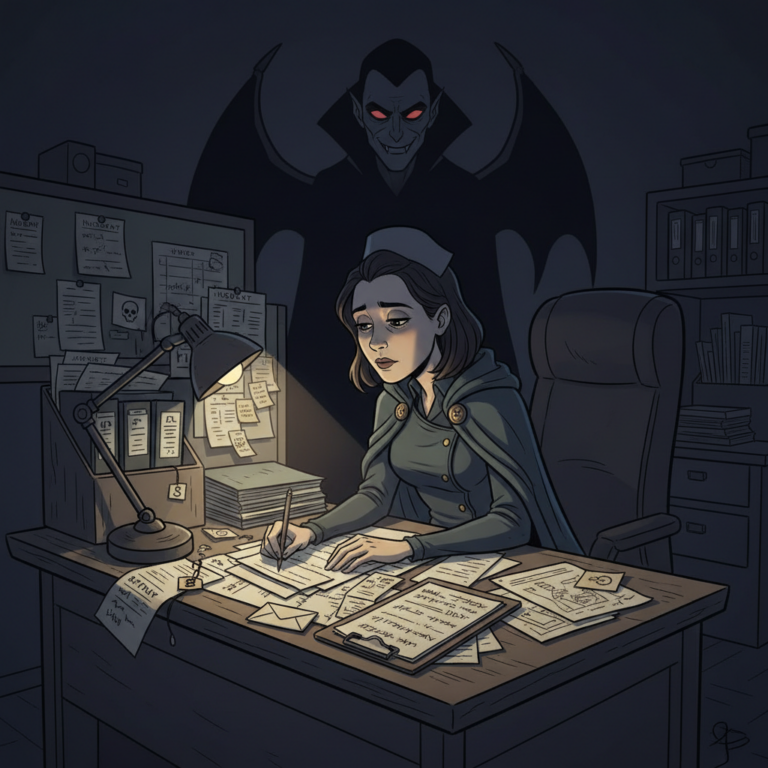
🧛♀️ THE VAMPIRE SHIFT RULE
Here is what I eventually learned:
Protect your sleep before you protect everything else.
Not because you’re selfish.
Because you cannot keep giving from an empty biological battery.
Blackout the room.
Control the light.
Reduce the noise.
Manage the phone.
Think about caffeine.
Create a transition between the ward and your bed.
And most importantly:
Stop apologising for sleeping during the day.
You are not lazy.
You are not antisocial.
You are not wasting the day.
You are recovering from the night.
🚪 ACCESS THE AIRLOCK
This transition isn’t something you have to figure out alone in a dark bedroom while your brain loops through every clinical mistake you’ve made since 2009.
The day people may never completely understand the strange little universe that exists between:
4 AM
and
“Why are you still asleep? It’s sunny!”
But we do.
Step into The Asylum Sanctuary — our private, deliberately moderated digital space for night-shift workers.
No corporate wellness slogans.
No forced sunshine.
No pretending that a lavender candle will solve twelve hours of accumulated exhaustion.
Just people who understand the night.
Share the trench stories.
Share the ridiculous moments.
Share the dark humour.
Share what actually helps you survive.
The Sanctuary is free to join and designed to remain independent from corporate advertising. The Owl Nurse helps support the work behind it.
Take off your sterile gloves.
Close the curtains.
Put your phone on Do Not Disturb.
And tell the daytime world:
“Not now. I’m sleeping.”
Because the sun may have the entire sky.
But the night shift owns the shadows.
Your coven is waiting.
🦉 A NOTE FROM THE NIGHT WARDEN
This Scroll is about the realities of night-shift life and practical sleep-support strategies. It is not intended to diagnose, treat or replace individual medical advice.
If persistent sleep problems, excessive sleepiness, mood changes or difficulty functioning are affecting your life or your ability to work safely, speak with an appropriate healthcare professional or occupational-health service.
And if you are working nights, remember one thing:
You don’t have to prove your dedication by destroying your sleep.
The hospital will still be there when you wake up.
Seamus probably will too.
Unfortunately.
Note: The Facebook Group is our temporary launch incubator. Our fully private custom platform is under construction right here on the website!
Transmission sources: Clinical data and direct quotes curated from Dr. Matthew Walker (Why We Sleep / The Matt Walker Podcast) [Image_RIZX4J], Dr. Greg Potter (The Tim Ferriss Show), Dr. Satchin Panda (The Circadian Code), and Dr. Andrew Huberman (Huberman Lab Podcast: “How to Defeat Jet Lag, Shift Work & Sleeplessness”).